
In modern architecture, elevators are much more than just a means of transportation. They act as a vertical connector, an architectural feature, and a testament to innovation. Elevators are crucial to a building’s functionality, accessibility, and aesthetic appeal, making their design a fundamental aspect of the construction process. The initial design phase, including the creation of permit sets for elevator design, lays the groundwork for a successful project. This phase influences key factors such as layout, space optimization, safety standards, operational efficiency, and user experience.
In both residential and commercial construction, the seamless integration of every building component is essential, with the elevator system being one of the most significant elements in multi-story buildings. Permit sets play a critical role in transforming the conceptual vision into reality. These sets ensure that the construction process remains safe, compliant, and efficient. In this discussion, we’ll delve into the significance of early elevator design and permit sets for elevator design, examining the key considerations and steps involved in crafting a system that harmonizes with both the building’s functionality and its aesthetic objectives.
What Are Permit Sets in Elevator Design?
Permit sets refer to the detailed and finalized design documents submitted to regulatory authorities for review and approval before construction begins. These sets include comprehensive architectural, mechanical, and electrical plans that outline the elevator system’s design, specifications, and installation process. Unlike preliminary sketches or design drafts, permit sets are legally binding and must comply with local building codes and safety standards. In addition to technical specifications, they also encompass the overall design of the elevator cab, taking into account aesthetics, customer experience, and the durability of material selections. This ensures that the elevator system not only functions efficiently but also provides a visually appealing and long-lasting solution for building occupants.
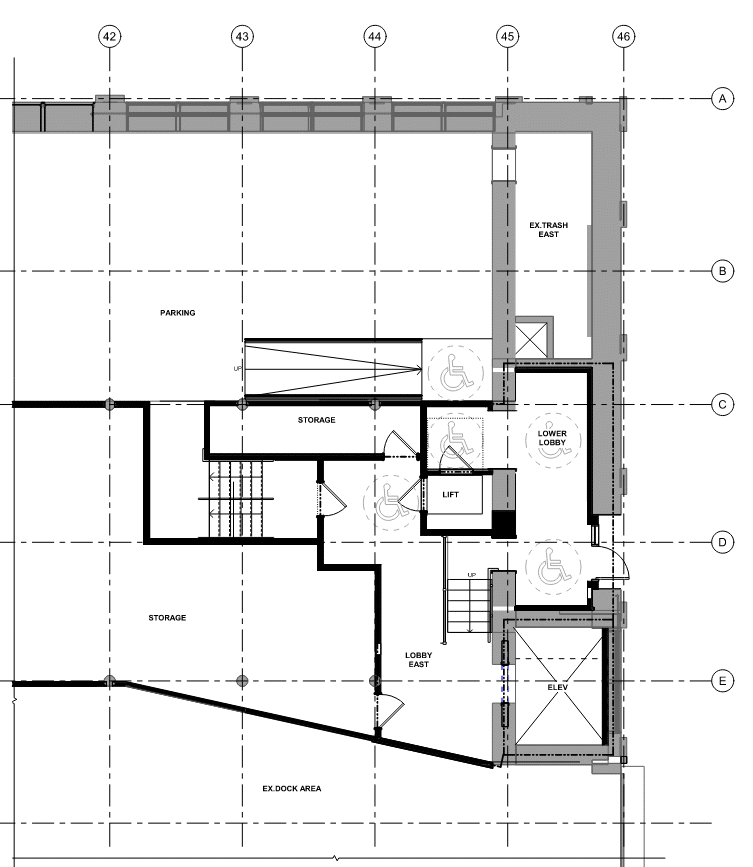
Floor Plan Lobby and Elevator Design

Architectural Section
In this project, the lobby of an existing building was redesigned to enhance its functionality and aesthetic appeal, while ensuring compliance with ADA accessibility standards. A key update involved the integration of a new elevator into an existing elevator shaft. This modification was necessary to establish a secondary entrance, as required by local regulations.
Benefits of Prioritizing Elevator Design at the Early Stages of Construction Projects
Prioritizing elevator design early in the planning stages of a construction project offers numerous advantages. As a vital element of modern buildings, elevator design significantly impacts both the functionality and aesthetics of a structure. By integrating elevator design into the initial planning phase, architects and developers ensure seamless integration with the building’s layout. This proactive approach results in:
- Efficient use of space
- Smooth traffic flow
- Improved accessibility
- Enhanced user experience
- Greater energy efficiency
- Reduced long-term operational costs
Additionally, addressing elevator design early helps streamline construction schedules and budgets. By identifying potential challenges or constraints in advance, project teams can avoid expensive redesigns or delays, ultimately ensuring a comfortable and efficient experience for all users.
Key Components of Permit Sets in Elevator Design
1. Regulatory Compliance
Permit sets ensure that elevator designs adhere to all relevant local, state, and national building codes, such as the ASME A17.1/CSA B44 safety code for elevators. Adhering to these codes is essential for obtaining construction permits and avoiding delays or costly redesigns.
2. Safety Assurance
Safety is a top priority in any construction project, especially when designing elevators used daily by people. Permit sets include precise calculations, load requirements, and safety features that guarantee the system’s structural integrity and operational reliability.
3. Coordination Among Stakeholders
The permit set serves as a reference point for architects, engineers, contractors, and elevator manufacturers, ensuring seamless coordination and reducing the risk of errors during installation.
4. Streamlining Construction
With an approved permit set, the construction team can proceed confidently, knowing the design has been validated. This reduces uncertainty and helps avoid delays.
5. Future Maintenance and Upgrades
Permit sets are a permanent record of the elevator’s design and installation. They are invaluable for future maintenance and upgrades, ensuring consistency and safety over the elevator’s lifecycle.
6. Layout Planning
Effective elevator layout planning focuses on optimizing placement and arrangement within a building to ensure efficient traffic flow and accessibility.
7. Energy Efficiency
Energy-efficient elevator designs are crucial for sustainability. By incorporating technologies like regenerative drives, LED lighting, and efficient motor systems, designers can minimize the carbon footprint while reducing operating costs.
8. Elevator and Cab Design
Elevator and cab design is key to integrating the system with the building’s aesthetics and functionality. Thoughtful design enhances space flow, accessibility, and durability, while boosting property value, reducing maintenance costs, and supporting sustainability goals. This approach ultimately increases return on investment.
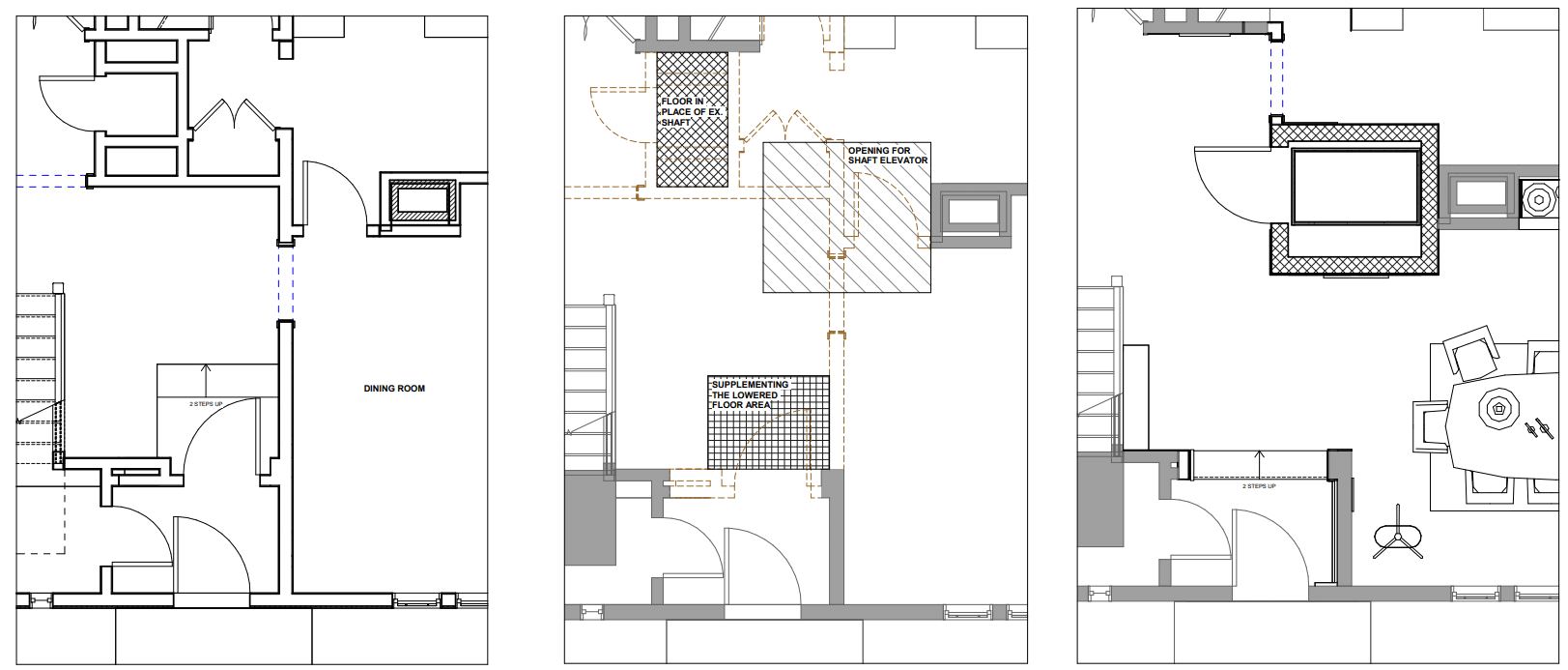
Residential Elevator Addition for a Single-Family Home
This project features the installation of a modern interior elevator at the entrance of a private residence, aimed at improving accessibility, convenience, and visual appeal. The elevator is thoughtfully positioned to integrate seamlessly with the home’s existing layout, offering both elegance and functionality.

Interior Rendering Elevator Addition for a Single-Family Home

Interior Rendering Elevator Addition for a Single-Family
Permit Sets in Residential vs. Commercial Projects
Permit sets for elevator installations in residential and commercial projects differ significantly in scope, complexity, and regulatory requirements.
In residential projects, such as elevator additions for single-family homes, the scope is typically smaller and simpler. These permit sets focus on accessibility and seamless integration into existing structures. They usually include basic architectural, structural, and MEP (mechanical, electrical, plumbing) plans, governed by local codes or the International Residential Code (IRC). The elevators are often designed for lighter loads and less frequent use, with an emphasis on efficiency, space optimization, and user-friendly operation.
In contrast, commercial projects require much more detailed permit sets due to their larger scale and more demanding safety and operational needs. These projects include complex designs, such as fire-rated elevator shafts, structural reinforcements, and integration with life safety systems. The permit sets must comply with stringent codes like the International Building Code (IBC), ASME A17.1, and ADA standards. The review process for commercial elevators is more rigorous, involving multiple agencies and addressing the higher capacity, safety, and operational demands of public or multi-use buildings.
Additionally, commercial elevators often have advanced features, such as destination dispatch systems and emergency power operations, designed for high-capacity use.

Elevator Design Concept
Commercial Elevator Addition for a Church
This project involves the addition of a commercial elevator to a church facility, aimed at improving accessibility and inclusivity for all congregants and visitors. The elevator is strategically located to serve as a central vertical connector, seamlessly blending with the church’s existing architecture. It will provide easy access to multiple floors, including the sanctuary, fellowship hall, classrooms, and administrative offices.
The Risks of Skipping Permit Sets
Failing to prepare or submit a detailed permit set can lead to severe consequences, such as:
- Construction Delays: Regulatory authorities may halt the project until compliant documents are provided.
- Increased Costs: Redesigning or reworking non-compliant installations can be expensive.
- Safety Hazards: Without proper design validation, the elevator system may pose risks to users.
- Legal Liabilities: Non-compliance can result in fines, lawsuits, or denial of occupancy certificates.
Understanding Elevator Systems: Hoist Mechanisms, Dimensions, and Performance
Elevators are essential in modern buildings, providing efficient and reliable vertical transportation. Whether for residential or commercial use, selecting the right elevator system depends on understanding key factors such as hoist mechanisms, dimensions, and performance characteristics. The choice of hoist system—whether gearless traction, geared traction, machine-roomless, or hydraulic—offers distinct advantages based on the building type and height. Additionally, elevator dimensions and performance—including speed, capacity, and energy efficiency—are critical to meeting the functional and regulatory requirements of the project.
Elevator Hoist Systems
Gearless Traction
- In a gearless traction system, the wheel is directly connected to the electric motor, allowing the drive sheave to rotate instantly. This rotation controls the upward and downward movement of the elevator cab. Known for their ability to achieve very high speeds, gearless systems are commonly used in tall buildings.
Geared Traction
- A geared traction system uses a gearbox connected to an AC or DC motor. The gearbox drives a wheel that moves the elevator ropes. While geared systems are slower than gearless systems, they use a less powerful motor and are more suited for mid-rise buildings.
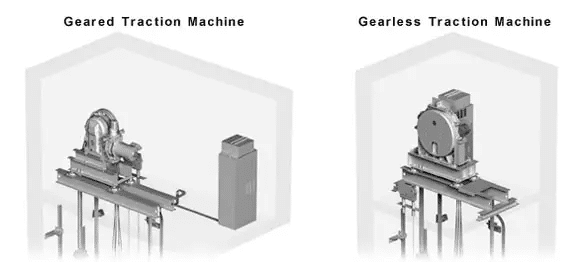
Photo courtesy of Dazen. | Source: Daze Elevator – Difference Between Geared and Gearless Traction Elevators
Machine-Roomless
- Machine-roomless systems, which can be either traction or hydraulic, are known for their compact hoisting sheaves. These systems eliminate the need for a dedicated machine room to house the elevator machinery, making them ideal for buildings where space is limited.
Hydraulic
- Hydraulic elevators are typically used in buildings up to six stories tall. Unlike geared and gearless systems, they do not rely on large overhead hoisting mechanisms. Instead, they use a piston located beneath the elevator to raise and lower the cab.

Photo courtesy of TKE. | Source: TK Elevator – Machine Room-Less Elevators.
Elevator Dimensions
For the elevator system to fit seamlessly within a building, architects must provide key dimensions that ensure compatibility with the design.
- Maximum Travel Distance: This is crucial for determining the appropriate elevator system. For buildings with up to six floors, hydraulic systems are ideal. However, traction systems are necessary for taller buildings, where greater vertical travel is required.
- Minimum Floor Height: The landing-to-landing distance is an essential factor when programming the elevator’s movement. It also defines the size limits for the elevator car.
- Hoistway Dimensions: These include the width, depth, and height of the elevator shaft. If the shaft is already in place, these dimensions should be provided. Otherwise, the system should be planned with standard compatibility in mind.
- Entrance Dimensions: The size of the elevator entrances can vary depending on the specific use. For example, hospital elevators typically require wider and taller entrances to accommodate medical equipment.
- Car Dimensions: The elevator car size depends on its intended use and required capacity. Passenger elevators are typically between 6-7 feet wide and 4-9 feet deep, with a capacity range of 2,000 to 5,000 pounds.
Elevator Performance
Elevator performance is largely determined by several key factors, including speed, capacity, and energy efficiency.
- Speed: Elevator systems differ in speed depending on their type. Gearless traction elevators can achieve speeds between 500 and 2,000 feet per minute. Geared systems typically reach speeds of up to 500 feet per minute, while hydraulic systems are more limited, operating at a maximum of 200 feet per minute. Regardless of the system, the maximum travel time is typically capped at 30 seconds to maintain efficient vertical transportation.
- Capacity: Elevators are designed with varying capacities depending on their purpose. Passenger elevators typically handle between 1,000 and 6,000 pounds, while freight elevators are built to manage much larger loads, with capacities reaching up to 20,000 pounds.
- Energy Consumption: Elevators account for approximately 5% of a building’s total energy usage. While hydraulic systems are less energy-efficient than traction systems, they remain common in low-rise buildings. To mitigate energy consumption, elevator systems can implement strategies such as using intelligent software that adjusts to traffic patterns, incorporating green materials, and installing energy-efficient lighting. These approaches can improve both performance and sustainability.
Photo Credits
Images by Pionarch:
All images used in this blog that are not otherwise credited are courtesy of Pionarch.
External Image Sources:
Photo: Daze Elevator – Difference Between Geared and Gearless Traction Elevators
Photo: TK Elevator – Machine Room-Less Elevators
Sources:
Architizer. Elevators and Escalators: A Comprehensive Guide to Vertical Transportation in Architecture. Accessed January 2, 2025. https://architizer.com/blog/product-guides/product-guide/elevators-escalators/
Day Elevator & Lift. Unveiling the Significance of Preliminary Elevator Design in Building Construction. Accessed January 2, 2025. https://www.dayelevator.com/unveiling-the-significance-of-preliminary-elevator-design-in-building-construction/