
Accessible Bathroom Remodel, Beverly MA
Beverly, MA ADA Accessible Bathroom by Pionarch
Project Description
This project involved the complete transformation of an outdated laundry room and undersized bathroom into a fully accessible, ADA inspired bathroom designed to support aging in place. The homeowner needed a safer and more functional environment that would improve mobility, increase comfort, and allow for long term independence without compromising aesthetics.
Working within an existing footprint of approximately 7 feet by 14 feet, the renovation focused on creating a barrier free layout that would feel warm, residential, and highly usable for both present and future mobility needs.
For homeowners researching accessible design and aging in place solutions, the Americans with Disabilities Act (ADA) and the National Institute on Aging provide excellent resources on accessibility standards and long term home planning.
The Existing Space
Before the renovation, the bathroom and adjacent laundry area were configured as a small, enclosed and highly constrained space with limited functionality. The layout included a compact shower enclosure, a narrow 30 inch pocket door, and minimal circulation space, making movement and accessibility difficult.
The existing conditions were not suited for users with mobility limitations and lacked key safety and support features commonly found in accessible design.
The home also presented structural constraints typical of older construction. Interior wall assemblies included heavy cementitious finishes over metal lath, which significantly increased demolition effort. What was initially expected to be a one day removal process ultimately required four days of careful demolition due to the density and layered nature of the existing materials.
In addition, the bathroom is located above an unconditioned space, which contributed to cold floor conditions and reduced overall comfort during colder months.
Designing for Accessibility and Comfort
The primary goal of the renovation was to create a space that prioritized safety, accessibility, and ease of use while maintaining a refined residential feel. Rather than simply updating an existing bathroom layout, the project involved removing the original bathroom and expanding into the adjacent laundry room area to create a larger, more functional footprint. This reconfiguration allowed the space to be rethought from the ground up, improving circulation and enabling a more intentional accessibility-focused layout.
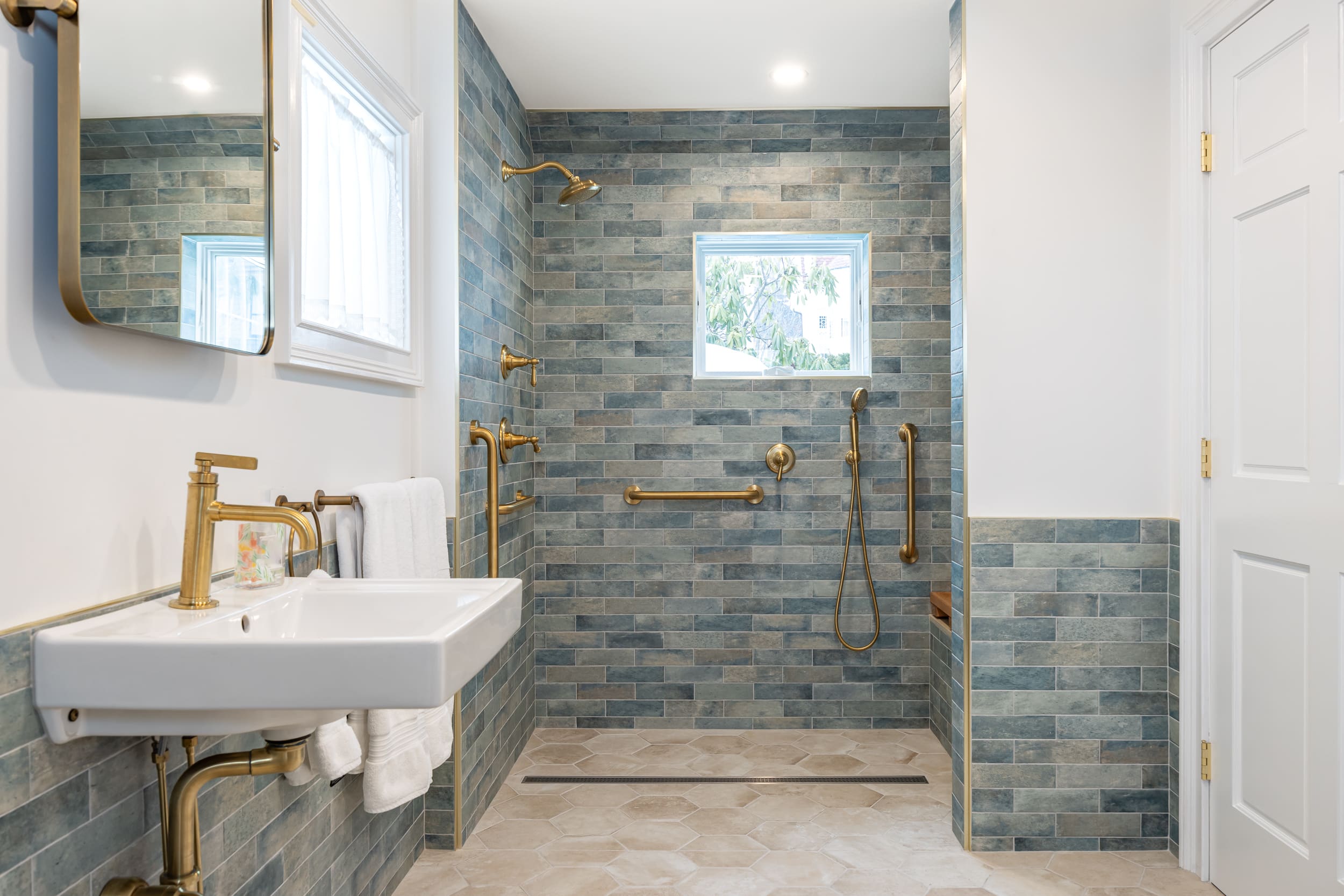
One of the most important changes was the introduction of a fully curbless walk in shower. Eliminating the shower curb significantly improved accessibility and reduced tripping hazards. The shower floor was engineered with a controlled slope and a centrally positioned linear drain to support safer footing and more stable movement through the space.
A built in bench was incorporated and set at a comfort height to assist with sitting and standing transitions. Dual shower controls were added to allow water operation from multiple positions within the shower, improving usability for both independent and assisted bathing. Recessed storage niches were placed within easy reach from the seated position to reduce unnecessary reaching or standing.
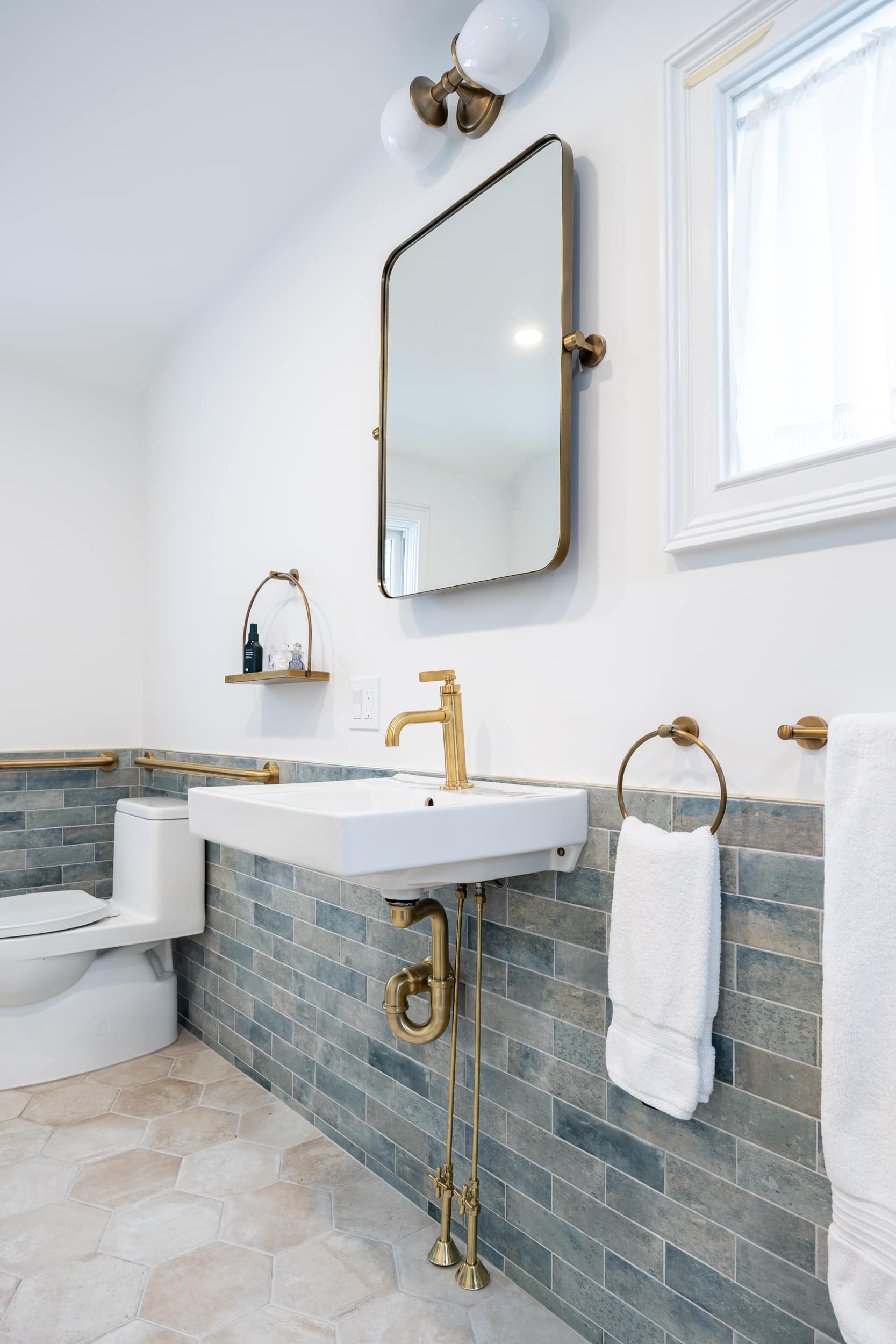
The bathroom was also planned with future wheelchair accessibility in mind. A new 36 inch entry door replaced the previous narrow access point, improving overall circulation. The wall mounted sink was designed with clear knee space and reduced plumbing obstruction to support forward approach access. A tilted mirror was installed to improve visibility for seated users, and a comfort height toilet was selected to improve transfer ease.
Multiple ADA style grab bars were integrated throughout the shower and bathroom. These were not surface additions, but structurally supported elements installed with reinforced blocking during framing to ensure long term stability and safety.
The project was guided by widely recognized Universal Design principles, which emphasize usability, comfort, and long term functionality across a wide range of mobility levels. This approach informed layout planning, fixture selection, and circulation strategy throughout the space.
For general reference, an overview of these principles is available here: Universaldesign.org
The Centers for Disease Control and Prevention Fall Prevention Program highlights how features such as grab bars, barrier free showers, and improved circulation can significantly reduce fall risks in residential bathrooms.
Materials and Aesthetic Direction
While functionality remained the driving force behind the renovation, equal attention was given to the overall visual character of the space. The design draws inspiration from the home’s coastal setting, incorporating soft blue tones, warm sandy neutrals, textured tile finishes, and coordinated brushed gold fixtures and accessories.
The result is a bathroom that feels calm, modern, and inviting rather than overtly medical. Dimmer controlled lighting was added throughout the room to allow flexible adjustment depending on time of day and user comfort.
Careful coordination between plumbing fixtures, tile trim profiles, hardware finishes, and accessories helped create a cohesive and polished final appearance.
Structural and Mechanical Improvements
Beyond the visible finishes, the renovation included substantial infrastructure upgrades that improved both comfort and long term performance. The bathroom floor structure was rebuilt and reinsulated to improve thermal performance above the unconditioned area below. Air sealing measures and blown cellulose insulation were added to create a noticeably warmer and more comfortable floor system.
Plumbing systems were also reconfigured to better support accessibility clearance requirements while minimizing visual clutter beneath the sink area.
Homeowners considering energy efficiency improvements alongside remodeling projects can find additional guidance through the U.S. Department of Energy Homeowner Resources.
Challenges
This project required a full reconfiguration of the existing layout rather than a standard bathroom remodel. The original bathroom footprint was removed, and the space was expanded into the adjacent laundry room area to create a larger, fully accessible layout. This introduced coordination challenges between multiple previously separate functional zones within the home.
One of the primary challenges was working within the constraints of the existing structure while achieving modern accessibility goals. The expanded layout had to be carefully planned to ensure proper circulation, turning radius considerations, and clearances for future mobility assistance without compromising structural limitations of the home.
Demolition also presented unexpected complexity. Behind the finished surfaces, the existing construction included dense, multi-layer wall assemblies with cementitious materials over metal lath. These assemblies significantly slowed removal and required careful, controlled demolition to avoid damaging surrounding structural elements.
Mechanical and plumbing coordination added another layer of complexity, as systems originally serving separate spaces had to be re-routed and consolidated to support the new layout. This required careful planning to maintain proper function while minimizing intrusion into the newly created accessible areas.
Finally, because the renovation was located above an unconditioned space, attention had to be given to floor structure, insulation, and air sealing to ensure the finished bathroom would be comfortable year-round and not impacted by cold transfer from below.
The Final Result
The completed bathroom now provides a significantly safer and more comfortable daily experience while supporting long term independence and accessibility needs. The new layout improves circulation, minimizes physical barriers, and allows for easier movement throughout the space while maintaining a warm coastal inspired aesthetic.
Most importantly, the renovation demonstrates that accessible design does not need to feel institutional. Thoughtful planning, careful detailing, and personalized solutions can create spaces that are both highly functional and beautifully integrated into the character of the home.
References
Americans with Disabilities Act (ADA)
https://www.ada.gov
Centers for Disease Control and Prevention – STEADI Caregiver Brochure
https://www.cdc.gov/steadi/pdf/steadi-caregiverbrochure.pdf
National Institute on Aging – Aging in Place: Growing Older at Home
https://www.nia.nih.gov/health/aging-place-growing-older-home
Universal Design Style Guide – Bathrooms
https://style.universaldesign.org/chapters/bathrooms#id-6.6.3-toilet-talk
U.S. Department of Energy – Energy Saver
https://www.energy.gov/energysaver/energy-saver
Project Details
Size: ~98 sq ft
Construction Team: Pionarch Construction
Amenities
Gallery
Click on an image to enlarge.




Floor Plans
Click on an image to enlarge.
